
- All
- Product Name
- Product Keyword
- Product Model
- Product Summary
- Product Description
- Multi Field Search
Views: 0 Author: Site Editor Publish Time: 08-25-2026 Origin: Site


Product designers face a relentless battle against gravity, constantly striving to shed ounces to enhance user comfort and field agility without sacrificing structural integrity. A ripped tent canopy or a blown parachute seam can lead to catastrophic failure in demanding environments. Reducing overall weight often pushes procurement teams into a difficult corner, as lighter textiles may fail prematurely under sudden kinetic stress. This engineering dilemma makes material selection exceptionally critical when safety margins are virtually nonexistent.
Fortunately, Nylon Fabric remains the undisputed industry standard for achieving an optimal balance between extreme lightweight characteristics and uncompromising durability. This comprehensive guide breaks down exactly how this unique synthetic polymer achieves its impressive strength-to-weight ratios. We will delve into the underlying chemical science, specialized weave architectures, and calculated finishing processes. By understanding how to accurately interpret supplier specifications, you will be fully equipped to make informed, data-driven sourcing decisions.
Nylon’s inherent elasticity and long-chain polymer structure absorb kinetic energy significantly better than rigid alternatives like polyester.
Weave architectures, specifically the integration of thicker cross-threads (ripstop) or the use of high-density plain weaves like nylon taffeta fabric, dictate highly specific tear-resistance profiles.
Surface coatings, such as Silicone and PU, interact differently with nylon yarns, fundamentally either enhancing or degrading raw tear strength.
Evaluating nylon fabrics strictly requires analyzing standardized testing metrics (e.g., ASTM D1424) rather than relying solely on subjective denier counts.
Let us delve into the foundational chemistry of aliphatic polyamides. Nylon relies on a unique, long-chain molecular structure that grants the synthetic fibers remarkable natural elasticity. Typically, nylon exhibits a tensile elongation at break ranging between 35% and 60%, depending on the specific type (e.g., PA6 versus PA66), moisture content, and ASTM D638 test conditions. This built-in elongation functions precisely as a mechanical shock absorber, dispersing highly localized stress across a much broader surface area. When a sharp rock strikes a backpack, the fibers stretch dynamically instead of immediately snapping.
Understanding the critical distinction between tensile strength and tear strength is vital for accurate material specification. While tensile strength measures the brute pulling force required to cause complete material failure, tear strength measures how effectively the textile halts an existing micro-puncture from spreading. Nylon’s inherent elasticity truly excels in this area, actively preventing tiny holes from rapidly propagating into catastrophic running tears by dynamically absorbing the incoming kinetic energy.
Industry professionals frequently encounter two primary polymer variations: Nylon 6 and Nylon 6,6. While both share the foundational aliphatic structure, their respective synthesis processes differ. Nylon 6,6 features a tighter molecular alignment, resulting in slightly higher heat resistance and structural rigidity. Conversely, Nylon 6 provides superior dye affinity and excellent elastic recovery. Both variants possess the critical energy-absorbing characteristics demanded by ultralight applications. Choosing the right option depends heavily on your specific thermal requirements and project budgetary constraints.
Establishing a clear comparative baseline is essential for technical buyers, who frequently weigh polyamides against polyesters. Polyester undeniably resists UV degradation better, maintaining vivid dye colors during prolonged sunlight exposure. However, nylon delivers vastly superior abrasion resistance and raw dynamic tear strength per ounce of weight. This substantial performance gap easily justifies its premium cost in high-performance outdoor and tactical applications.
| Performance Metric | Aliphatic Polyamide (Nylon) | Polyester (PET) |
|---|---|---|
| Elasticity & Elongation | High (35% to 60% stretch) | Low (More rigid structure) |
| Tear Strength (per ounce) | Excellent | Moderate |
| Abrasion Resistance | Superior | Average |
| UV Resistance | Moderate (Requires treatment) | Excellent |
Many buyers make a critical error regarding yarn thickness, instinctively assuming a higher denier always equates to a tougher textile. This assumption is fundamentally flawed. Denier solely measures the physical weight and visual thickness of the raw yarn. Yarn tenacity—the ultimate breaking strength of an individual fiber strand—is equally paramount. A 30D high-tenacity yarn manufactured with premium polymers will easily outperform a cheap 70D plain weave. Therefore, specifications must detail tenacity alongside physical thickness.
The initial extrusion process largely determines baseline yarn tenacity. When manufacturers extrude molten polymer through a spinneret, they draw the cooling fibers to perfectly align the internal molecules. High-tenacity yarns undergo extreme drawing processes, aligning the molecular chains parallel to the fiber axis. This results in a significantly stronger filament at the exact same physical thickness. Buyers prioritizing weight-saving measures must explicitly request high-tenacity yarn specifications from their suppliers.
Weave geometry completely alters the physical behavior of the finished textile. Consider the mechanics of high-density plain weaves. Nylon taffeta fabric serves as a perfect engineering example. Weavers pack the warp and weft yarns incredibly tight on the loom, creating a highly smooth, unified surface. This dense over-under configuration naturally deflects abrasive friction away from the core threads and distributes sudden physical impacts evenly across the surrounding intersecting yarns.
For extreme environments, product engineers rely heavily on the ripstop mechanism, a technique that alters the grid architecture entirely to maximize durability.
Thicker Yarns: Manufacturers integrate heavy, reinforcing yarns into the lightweight base fabric at regular intervals, typically appearing as visible grids every few millimeters.
Firebreak Effect: The reinforced grid arrests tear propagation by efficiently distributing stress across adjacent yarns. These heavier grids act as physical barricades against spreading damage, dissipating kinetic energy the moment a tear reaches the thicker yarn.
Weight Efficiency: By effectively containing a puncture within a tiny visual square, manufacturers achieve massive tear resistance without adding the crippling overall weight of a uniformly heavy textile.
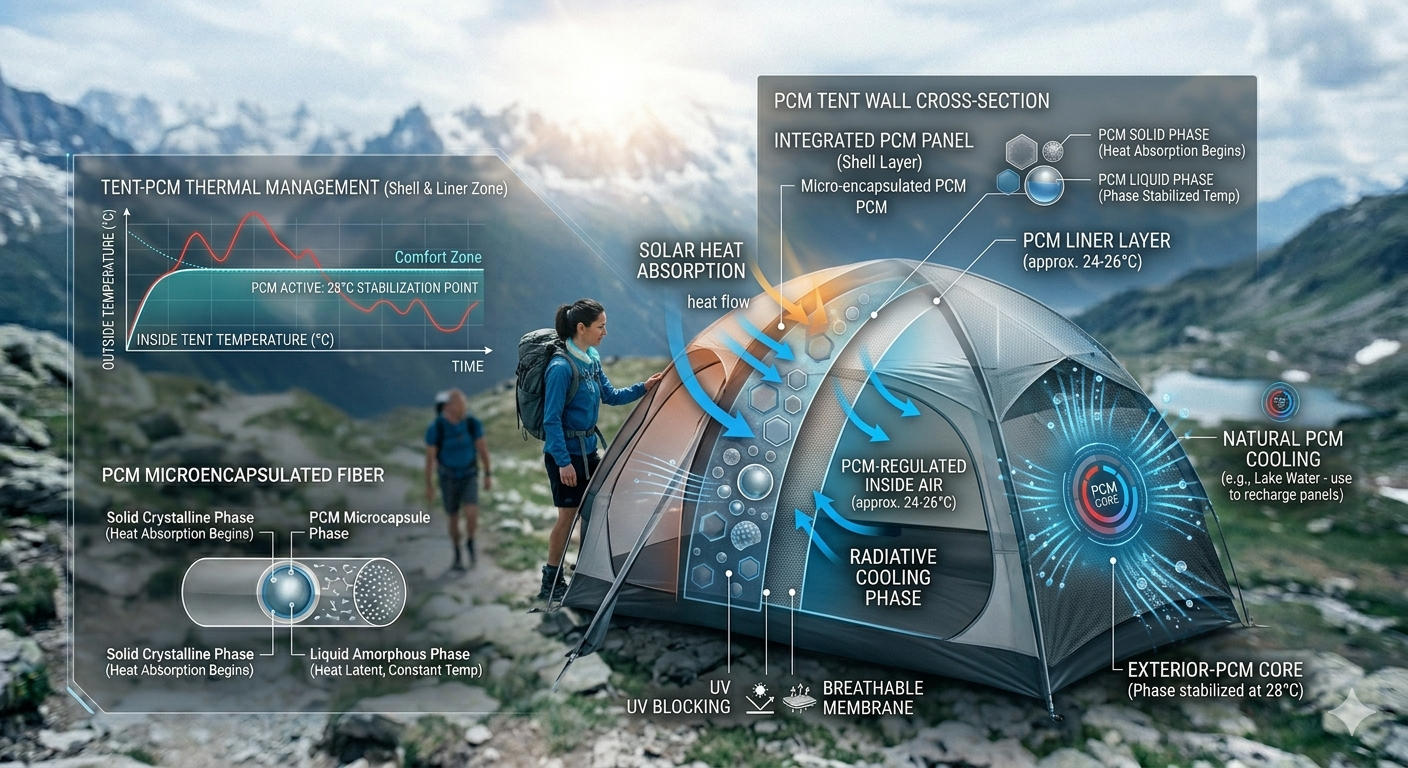
Selecting the right chemical finish requires a careful, calculated compromise. Applying protective treatments to nylon outdoor fabric necessitates balancing weather resistance against raw mechanical durability. Coating layers fundamentally change how the underlying yarns interact under tension, making it crucial to evaluate the intended use case before requesting heavy waterproof finishes.
Different chemical treatments interact quite differently with the base yarns. Let us carefully compare the two primary industry contenders:
Silicone Impregnation (Silnylon): Silicone liquid permeates deeply into the yarn bundle during application, acting as a permanent internal lubricant. When a sharp object impacts the material, the slippery fibers slide and bunch together dynamically, sharing the incoming kinetic load collectively. This advanced mechanism drastically increases the baseline tear strength.
Polyurethane (PU) Coating: PU sits rigidly on top of the textile surface, locking individual fibers tightly in place to create an impenetrable waterproof barrier. Unfortunately, these locked fibers cannot slide or share physical loads. If a snag occurs, localized stress snaps the fibers individually, often resulting in a significant decrease in the original tear strength.
Some advanced manufacturers employ a composite coating approach to mitigate these distinct trade-offs. They apply silicone impregnation to the exterior face of the textile for enhanced tear strength, while simultaneously applying a very thin, flexible PU coating to the interior face. This interior PU layer allows manufacturers to apply factory seam tape reliably, providing a highly balanced performance profile for technical gear.
Be vigilant of common implementation risks during the product design phase. Avoid over-specifying thick waterproof layers on ultralight materials. If dynamic tear resistance is your primary success criterion, heavy PU coatings will ultimately compromise structural integrity. Instead, prioritize flexible finishes that allow the natural elasticity of the polymer matrix to function properly.
Every supplier claim must be validated through rigorous, standardized lab testing. Never rely on generic marketing adjectives like "ultralight" or "heavy-duty." Comprehensive technical data sheets provide the only objective truth for material sourcing.
Look specifically for the Elmendorf Tear Test, recognized across the industry under ASTM D1424 or ISO 13937-1 protocols. This pendulum-based testing method drops a weighted, swinging blade through a pre-cut slit in the sample, perfectly simulating sudden, dynamic tearing forces experienced in the field. It remains the most reliable indicator of real-world survival for ultralight gear. Proceed with caution if a vendor cannot provide certified Elmendorf numbers.
Knowing the raw numbers is only half the battle; establishing minimum acceptable thresholds based on your specific product category is equally important. For example, ultralight backpacking tents typically require an Elmendorf tear strength between 1.5 to 3.0 kilograms of force, whereas heavy-duty tactical gear might demand thresholds exceeding 10 kilograms. Comparing a vendor's test results directly against your internal performance benchmarks prevents dangerous specification errors.
Do not confuse this specific metric with the Grab Test (ASTM D5034). While the grab test effectively measures overall tensile pull strength by pulling the textile apart from opposite ends until catastrophic failure, it does not accurately predict tear propagation behavior. Use this standard primarily to gauge overall seam integrity and burst durability.
Train your purchasing teams to quickly identify industry red flags. Common sourcing mistakes include accepting "estimated" denier strengths instead of certified lab results. Remain highly skeptical if a vendor evades specific questions about UV degradation treatments, as uncoated polyamides lose significant molecular integrity after prolonged sun exposure. Always demand clear documentation regarding chemical inhibitors.
Transitioning from small prototype batches to mass production introduces complex manufacturing variables. Batch consistency poses a major real-world challenge. Textile manufacturers utilize high heat treatments during the dyeing phase to set colors permanently. If factories fail to strictly control internal temperatures, excessive heat can permanently weaken the synthetic polymer chains. You might approve an incredibly strong initial sample only to receive a brittle, fragile production run.
Building transparent relationships with your textile mills ensures consistent long-term quality control. Inquire about their specific quality assurance protocols during both the weaving and finishing stages. Reliable mills track tension metrics precisely during the weaving process, knowing that inconsistent loom tension creates microscopic weak points across the fabric roll that inevitably fail during dynamic field loading.
Moisture absorption presents another hidden manufacturing reality. Polyamides are naturally hydrophilic materials that actively absorb ambient moisture from the surrounding air. High humidity inside a production facility will physically alter the material's dimensional stability. Factories require specialized climate controls to handle these textiles properly, as cutting panels in a humid environment frequently leads to uneven seams during final assembly.
To effectively mitigate these sourcing risks, follow strict shortlisting logic. Always request physical A4-sized swatches for tactile evaluation and demand detailed technical data sheets covering both mechanical and chemical properties. Thoroughly evaluate at least three different suppliers and conduct your own destructive mechanical tests internally before committing to a high minimum order quantity.
Maintaining structural integrity at remarkably low weights is never an accident; it requires treating the textile as a highly integrated engineering system.
Success relies on precisely balancing the inherent elasticity of the base polymer, the geometry of the weave, and the specific chemical coatings applied.
Prioritize yarn tenacity and smart ripstop grids over simply chasing a superficially higher denier count.
Understand the strict trade-offs of weatherproofing: silicone inherently enhances load sharing, while rigid PU can weaken it significantly.
Always validate supplier specifications using dynamic pendulum metrics like ASTM D1424.
Your immediate next step is to audit your current material specifications thoroughly. Request independent laboratory testing data from your existing vendors and challenge their assumptions regarding denier strength. Finally, subject physical fabric samples to rigorous field tests that strictly mirror your actual use-case conditions before authorizing large-scale production runs.
A: No. Tear strength relies heavily on yarn tenacity and weave architecture. A 30D high-tenacity ripstop can easily outperform a standard 70D plain weave. The physical thickness of the yarn matters far less than the intrinsic quality of the polymer and how the intersecting threads distribute sudden stress.
A: Prolonged UV exposure degrades the polyamide molecular chains, leading to extreme environmental brittleness. Unprotected gear can suffer up to a 50% loss in baseline tear strength over time. To ensure extended outdoor survival, the material must be treated with specialized UV inhibitors.
A: Silicone permeates deeply into the yarn bundle and lubricates the individual fibers, allowing them to shift and absorb incoming stress collaboratively. Conversely, PU coats the surface and locks fibers rigidly in place. Rigid threads cannot share kinetic loads, making them significantly easier to snap individually under tension.
A: While incredibly dense and highly wind-resistant, standard taffeta lacks a dedicated reinforced ripstop grid. It excels as a smooth inner lining or a low-abrasion outer shell. However, high-friction, heavy-duty environments necessitate heavily reinforced weaves to actively prevent catastrophic tearing.


