
- All
- Product Name
- Product Keyword
- Product Model
- Product Summary
- Product Description
- Multi Field Search
Views: 0 Author: Site Editor Publish Time: 07-08-2026 Origin: Site


Modern consumers refuse to compromise on their wardrobe expectations. They now demand sharp, tailored silhouettes alongside the undeniable comfort of activewear across every clothing category. Historically, fashion designers faced a highly frustrating dilemma. You either chose a rigid, structured fit restricting human movement, or you opted for a comfortable drape prone to losing its shape over time. Rigid materials maintain sharp lines but quickly frustrate the wearer during daily activities. Soft, unstructured knits stretch out and create unflattering bagging at the knees or elbows after a few hours of wear.
Integrating spandex fabrics serves as the ultimate engineering bridge for modern collections. This strategic addition completely resolves historical fit-retention issues while providing exceptional, day-long movement. Designers can achieve lasting architectural silhouettes by applying the correct blends and strictly adhering to modern sourcing criteria. Exploring these advanced textiles reveals exactly how technical yarns elevate everyday fashion.
Strategic integration of spandex (even at 2-5%) drastically improves garment shelf-life and consumer wearability by preventing bagging and sagging.
Selecting the right blend (e.g., pairing with polyester vs. cotton) dictates the end-use, cost margin, and performance profile of the fashion line.
Working with technical variants like quick dry spandex fabric allows designers to cross over into the lucrative athleisure and high-performance markets.
Successful implementation requires strict supplier evaluation on metrics like recovery rate, GSM consistency, and colorfastness.
Many novice creators confuse stretch with recovery, but industry veterans know the difference dictates garment survival. Stretch simply refers to elongation. It measures how far you can pull a textile before the threads reach their maximum tension. Recovery measures the material snapping back to its original, un-stretched state. Designers value recovery significantly more than raw stretch. High recovery prevents garments from deforming after multiple washes and extended wear cycles.
You can define a successful elastane integration by looking at the garment's behavior under stress. A well-engineered tailored suit jacket containing a tiny percentage of elastane maintains an architectural, crisp silhouette. Yet, it still allows the wearer a full range of motion when reaching for a high shelf. The success criteria hinge on zero sagging around high-friction joints like elbows, knees, and the seat of trousers.
Contrary to popular belief, mills rarely use 100% elastane in apparel. Raw elastane resembles a fragile rubber band and lacks the durability or aesthetic appeal needed for clothing. The true magic lies in the structural framework of the primary yarn. Spinners wrap fibers like cotton, nylon, or polyester around an elastane core. This core-spun yarn technique hides the synthetic stretch fiber while capturing its elastic properties. The primary yarn provides the hand-feel and visual texture, while the hidden core does the heavy lifting for fit retention.
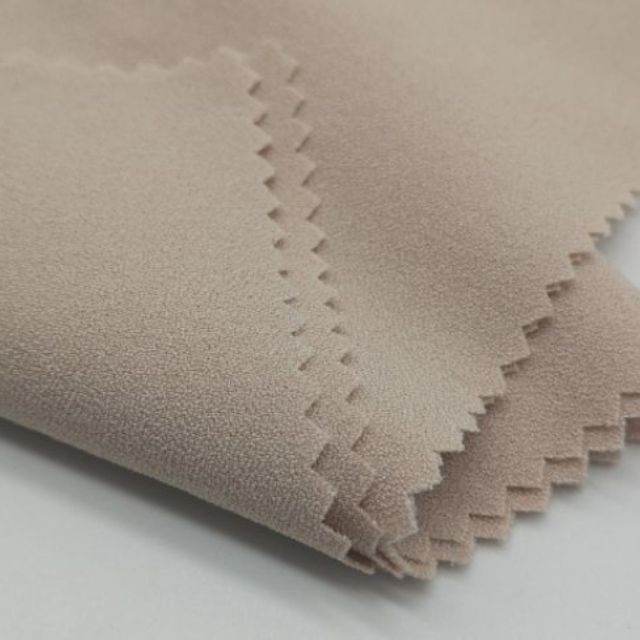
Designers must choose their foundational yarns carefully because elastane merely enhances the primary fiber. Modern fashion relies heavily on three primary blend categories. Cotton blends offer natural breathability. Nylon blends provide a silky, premium touch. Polyester blends deliver unmatched durability and structural resilience.
Selecting polyester spandex fabric acts as a cornerstone strategy for commercial and high-fashion designers alike. This specific pairing outshines natural alternatives in several crucial areas. It boasts exceptional durability against abrasion. It strongly resists shrinking in commercial laundry settings. Most importantly, it retains vibrant dye colors significantly better than cotton blends. When brands launch neon activewear or deeply saturated black leggings, they rely entirely on polyester's ability to lock in dye molecules permanently.
Designers utilize specific decision matrices when planning a new line. Here is a breakdown comparing the primary blend options available in today's textile market.
Fabric Blend Evaluation Matrix
Primary Blend Category | Best Application Use-Cases | Key Advantages | Common Limitations |
|---|---|---|---|
Cotton-Spandex | Everyday casual wear, loungewear, light denim | Highly breathable, natural hand-feel, soft against skin | Higher risk of color fading, moderate shrinkage, slower drying time |
Nylon-Spandex | Swimwear, premium intimates, high-end hosiery | Incredibly soft hand-feel, lightweight, excellent drape | Higher material cost, can pill under high friction |
Polyester-Spandex | Activewear, durable uniforms, printed leggings | Vivid print retention, highly durable, cost-effective scaling | Can retain odors if not treated, less natural hand-feel |
This framework allows design teams to match the textile directly to the consumer's end-use expectations. If you prioritize vivid sublimation prints and cost-effective production scaling, polyester remains the undisputed champion.
The market convergence of high fashion and functional activewear created the booming athleisure sector. Consumers no longer separate their gym clothes from their casual office wear. This behavioral shift creates a massive business opportunity for brands willing to upgrade their textile choices. Designers can capture this lucrative market by embedding athletic performance features into everyday silhouettes.
Integrating quick dry spandex fabric provides the technical foundation for this crossover. The engineering behind this textile relies on sophisticated capillary action. The primary synthetic fibers feature specialized microscopic channels. These channels pull sweat and moisture away from the skin, driving it to the garment's surface where it evaporates rapidly. Simultaneously, the elastane component provides a robust 4-way stretch, moving flawlessly with the body.
You can map this performance textile to highly specific designer use-cases:
Premium Leggings: Ensures complete opacity during deep stretches while managing heavy perspiration.
Golf Apparel: Polos and trousers maintain a sharp, country-club aesthetic while offering the rotational stretch needed for a golf swing.
Hybrid Workwear: Commuter pants and blazers resist wrinkles and manage moisture during active commutes.
When sourcing these materials, designers must verify the wicking mechanism. Some mills use cheap chemical wicking treatments. These topical coatings wash out after twenty laundry cycles, leaving the consumer with a poorly performing garment. You should always source inherent mechanical wicking structures. Mechanically engineered yarns permanently move moisture, securing your brand's long-term reputation for quality.
Upgrading a fashion line with elastic components requires careful manufacturing adjustments. Introducing stretch into your supply chain instantly adds complexity to the factory floor. Experienced production managers know standard woven fabric protocols will fail when applied to elastane blends.
Cutting risks pose the first major hurdle. Stretch textiles arrive in tight rolls, placing the yarns under high tension. If a factory cuts the material immediately after unrolling it, the cut panels will dramatically shrink. The pieces will snap back to their relaxed state, completely distorting your carefully graded patterns. Factories must unroll the yardage and let it rest flat for 24 to 48 hours. This mandatory relaxation period prevents post-cut shrinkage.
Sewing these blends also demands specific machinery and haberdashery adjustments. Standard sharp needles will pierce and sever the delicate elastane core, leading to runs and structural failure. You must mandate the following sewing adjustments:
Ballpoint Needles: These rounded tips push the synthetic fibers aside rather than piercing them.
Thread Tension Reduction: Loosening the tension prevents the seams from puckering and snapping under physical stress.
Specialized Machinery: Factories must use overlock (serger) and coverstitch machines. These machines create interlocking thread loops, allowing the seam to stretch safely alongside the fabric.
Finally, heat sensitivity remains a critical risk factor. High-heat finishing processes easily melt or permanently degrade the elastane core. If a factory uses aggressive commercial ironing or excessive heat during dye sublimation, the garment will lose its recovery properties entirely. It will emerge from the factory floor looking fine but will sag irreparably during the customer's first wear.
Transitioning from design concept to wholesale ordering requires strict vendor vetting. Designers must demand total transparency from mills to avoid costly production disasters down the line. You should evaluate potential partners across several distinct technical dimensions.
Always demand granular technical specifications on the tech pack. Knowing the weight, measured in Grams per Square Meter (GSM), helps you predict the garment's drape and opacity. You must also clarify the stretch percentage. Differentiate between 2-way stretch (stretches horizontally) and 4-way stretch (stretches both horizontally and vertically). Crucially, require documented recovery test data. A reputable supplier can prove their textile returns to at least 95% of its original shape after mechanical stretching.
Compliance and consumer safety represent non-negotiable evaluation metrics. Synthetics undergo heavy chemical processing during extrusion and dyeing. Highlight the importance of Oeko-Tex Standard 100 certifications. This globally recognized certification guarantees the synthetics, dyes, and finishing agents are completely free from harmful chemicals. It protects the end-consumer's skin and shields your brand from liability.
Establish a rigorous, step-by-step workflow for procurement before committing to high Minimum Order Quantities (MOQs):
Order physical swatch books to evaluate hand-feel and weight.
Request lab dips to confirm your specific pantone colors translate accurately onto the synthetic blend.
Purchase a small sample yardage to run a complete prototype.
Subject the prototype to a brutal wash-and-wear test. Stretch it, wash it in hot water, and measure the shrinkage and recovery before signing the bulk purchase order.
Integrating elastane into modern apparel represents a strategic design tool, not just a simple comfort upgrade. The correct application of these textiles guarantees garment longevity, striking silhouettes, and the dynamic fit modern consumers demand. By understanding the critical differences in blends, wicking technologies, and production floor realities, fashion brands can confidently elevate their collections.
We encourage you to audit your current clothing lineup to identify hidden stretch-deficit areas. Look for garments prone to wrinkling, bagging, or customer fit complaints. Contact our technical sales team today to request a curated sample pack, tailored specifically to the structural needs of your upcoming fashion collection.
A: For everyday garments like denim, shirting, or casual trousers, designers integrate 2-5% elastane. This provides comfortable movement without altering the fabric's traditional look. For high-compression activewear, swimwear, and performance cycling gear, designers utilize between 15-25% to ensure maximum stretch and aggressive recovery.
A: These terms all refer to the same synthetic polyurethane fiber. Spandex is the common term used primarily in the United States. Elastane is the generic terminology used throughout Europe and the rest of the world. Lycra is a specific, trademarked brand name of elastane originally developed by the DuPont corporation.
A: A common misconception claims elastane traps heat. In reality, the primary fiber dictates breathability. Because elastane typically makes up less than 10% of the garment, the surrounding cotton or polyester determines airflow. However, high-elastane blends often require very tight knit structures, which can physically restrict air circulation.
A: It experiences very minimal shrinkage. The synthetic nature of polyester makes it highly stable under heat and agitation compared to natural fibers. It remains far more structurally sound than cotton-spandex blends, provided the consumer washes and dries the garment according to the manufacturer's care label.


