
- All
- Product Name
- Product Keyword
- Product Model
- Product Summary
- Product Description
- Multi Field Search
Views: 0 Author: Site Editor Publish Time: 09-22-2026 Origin: Site


High-altitude and snow environments reflect up to 80% of UV rays. This intense exposure makes winter outerwear just as critical for sun safety as lightweight summer gear. You simply cannot ignore solar radiation in the snow.
Buyers and manufacturers often treat warmth and sun protection as separate requirements. We see many brands prioritize insulation over verifiable UV defense. However, engineering outerwear for extreme environments requires a composite approach. You must balance thermal retention with solid sun shielding to protect the end-user effectively.
This article demystifies the structural and chemical technologies driving modern winter gear. You will learn how to evaluate claims, durability, and performance. We provide a rigorous framework to help you choose the best materials. This knowledge empowers you to confidently specify and source high-performance winter apparel.
Not all heavy winter fabrics inherently block harmful UV radiation; verifiable UPF (Ultraviolet Protection Factor) ratings depend on weave density, dye structures, and specific chemical treatments.
True downproof fabric must achieve high mechanical density to prevent feather leakage, which naturally aids in UV scattering, but often requires secondary treatments for full broad-spectrum protection.
When evaluating UV resistant fabric for winter gear, decision-makers must weigh the trade-offs between chemical coatings (which can wash out) and structural yarn innovations (which offer permanent protection).
Compliance with standardized testing methods (e.g., AATCC 183 or ASTM D6603) is the only reliable metric for verifying performance claims.
Textiles do not simply block sunlight. They actively manipulate light waves through absorption, reflection, and scattering. This triad forms the foundation of all technical sun defense. Absorption occurs when dyes or polymers convert UV energy into harmless heat. Reflection bounces the radiation away from the body entirely. Scattering diffuses the incoming light waves across the material surface. You need all three mechanisms to achieve a high UPF rating. An effective UV protection fabric optimizes this triad to prevent harmful UVA and UVB rays from reaching the skin.
Many consumers believe heavier materials automatically provide superior sun defense. This is a dangerous misconception. Raw weight matters far less than weave porosity. A thick but loosely knit sweater lets significant radiation pass through its gaps. Conversely, a lightweight microfiber construction features a highly dense weave. Tightly packed yarns minimize interstitial spaces. They leave no room for light to penetrate. Textile engineers focus on shrinking these microscopic gaps rather than simply adding bulk to the garment.
Manufacturers achieve sun defense through two primary methods. Each carries distinct performance characteristics.
Inherent Protection: Extrusion facilities embed synthetic polymers with titanium dioxide (TiO2). The mineral sits permanently inside the fiber structure. It cannot wash off or degrade easily. We recommend inherent protection for extreme environments.
Chemical Treatments: Mills apply topical chemical finishes post-weaving. These coatings sit on the fabric surface. They offer excellent initial UPF ratings but present a clear durability risk. Surfactants and agitation slowly strip these treatments away over multiple wash cycles.
Best Practice: Always verify the intended lifespan of the garment. If the user expects to wash the item frequently, inherent structural protection is strictly necessary.
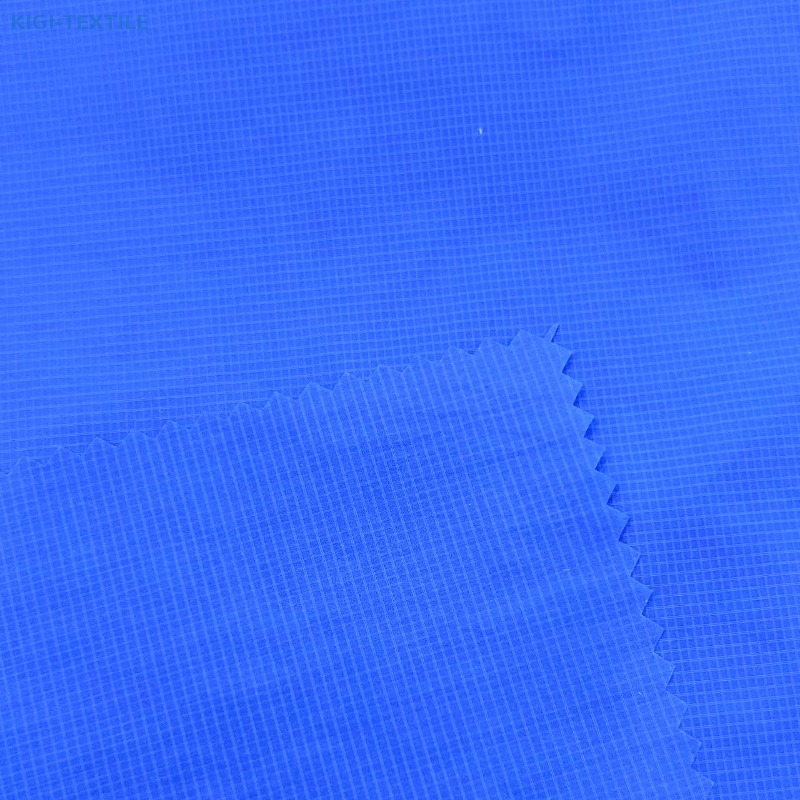
Creating outerwear for alpine use presents a massive technical challenge. A modern down jacket fabric must be highly breathable and exceptionally lightweight. It must prevent fine feathers from escaping. Simultaneously, it needs to block intense alpine UV radiation. Achieving this dual function requires precise mechanical engineering. If you make the material too porous, down escapes and UV penetrates. If you make it completely impermeable, internal moisture cannot escape. Sweat accumulates, freezing the wearer from the inside out.
Mills solve this permeability issue using a process called calendaring. Heavy industrial rollers apply extreme heat and pressure to the textile surface. This process slightly melts and flattens the yarns. The flattened fibers lock together, dramatically reducing the porosity of the material. This creates a highly effective downproof fabric. A fortunate byproduct of this heat treatment is increased UPF. By crushing the pores shut to keep feathers in, the fabric naturally scatters and blocks incoming sunlight far more efficiently.
Selecting the right base polymer dictates the final protective capabilities.
Polyester: This synthetic fiber excels at absorbing UV light. Its molecular structure contains benzene rings. These rings naturally intercept solar radiation. Polyester inherently scores high on UPF tests before any topical finishes are applied.
Nylon: Outdoor brands favor nylon for its superior tear strength and abrasion resistance. However, raw nylon is generally weaker at inherent UV absorption. It requires specialized dark dyes, dense weaving, or heavy calendaring to match the sun-blocking performance of polyester.
You must measure technical textiles against strict outcome metrics. The thermal-to-weight ratio dictates garment packability. Adding dense chemical coatings or using heavier yarn deniers can ruin a jacket's loft. It makes the garment stiff and difficult to compress. Furthermore, you must track the Moisture Vapor Transmission Rate (MVTR). Heavy coatings severely inhibit breathability. Poor MVTR leads to internal condensation. In sub-zero temperatures, trapped sweat becomes dangerous.
Common Mistake: Specifying an ultra-high UPF coating without testing its impact on MVTR. Always test breathability after applying sun-blocking finishes.
Table: Core Evaluation Metrics for Winter Outerwear Materials
Evaluation Metric | Definition | Ideal Range / Standard |
|---|---|---|
UPF Rating | Measures the fraction of UV rays blocked by the fabric. | UPF 50+ (Blocks 98% of rays) |
MVTR | Moisture Vapor Transmission Rate; measures breathability. | > 10,000 g/m²/24h for active alpine gear |
Downproof Rating | Resistance to feather penetration through the weave. | Zero penetration under standard rubbing tests |
Fabric Denier (D) | Thickness of the individual yarns used. | 10D to 30D for lightweight performance gear |
Never accept generic marketing claims regarding sun safety. Demand empirical data from third-party laboratories. You should look for certifications tested under recognized global standards.
AATCC 183: The North American standard for measuring UV transmittance through fabrics.
EN 13758-1: The European standard detailing UPF testing requirements.
AS/NZS 4399: The Australian and New Zealand benchmark, widely considered the strictest globally.
Evaluating UV Protection & Down Jacket Fabrics through these exact standards ensures verifiable protection for the end-user.
Warn your procurement teams against vague "sun-blocking" tags. A label claiming "UV defense" means nothing without a numerical UPF rating. Only trust materials accompanied by verifiable laboratory test results. Always ask suppliers to provide the specific test method used.
Materials behave differently in a laboratory than they do on a mountain. When an active user bends an elbow or shoulder, the fabric stretches. This physical tension temporarily widens the microscopic gaps between yarns. When pores open, UV penetration increases. We call this a dynamic UPF drop. Designers must accommodate this by engineering gussets or using inherently denser weaves in high-tension areas.
Laundering introduces severe risks to high-performance textiles. Harsh detergents contain surfactants. These chemicals aggressively strip away topical UV treatments. Mechanical agitation in a washing machine physically breaks down the calendared seal. Over time, the garment loses its ability to block UV rays and contain feathers. You must educate consumers on proper care. We highly recommend using gentle, tech-specific detergents.
It is a scientific reality that materials lose protective capability when wet. Whether soaked by melting snow or heavy sweat, water fills the spaces between fibers. Water changes the refractive index of the textile. This allows more UV radiation to pass directly through the material. A premium UV resistant fabric mitigates this risk. It uses hydrophobic durable water repellent (DWR) treatments to force water to bead up and roll off, maintaining the integrity of the UV barrier.
You must match the textile specification directly to the intended environment. An urban commute requires vastly different engineering than an alpine expedition.
Extreme Alpine and Skiing: Prioritize structural, inherent defense. Look for TiO2 embedded yarns. Combine them with mechanical calendaring. Use dense nylon or polyester blends. This provides maximum longevity against intense snow glare and physical abrasion.
Urban and Light Outdoor: You can safely utilize topical UV treatments on lighter, gently calendared materials. This approach maintains sufficient protection for lower-exposure environments. It also keeps manufacturing processes highly efficient.
Move beyond visual inspections when evaluating new materials. Request comprehensive Technical Data Sheets (TDS) from your mill. Specifically ask to see wash-test results. You want to verify the UPF rating remains above 30 or 50 after at least 40 wash cycles. Finally, manually assess the fabric's hand-feel. Make sure the applied coatings have not rendered the textile too stiff or noisy for comfortable wear.
Integrating UV protection into winter down gear is absolutely not a marketing gimmick. It remains a vital functional requirement for high-exposure alpine and snow environments. We know snow reflects massive amounts of radiation, endangering users who think the cold negates the sun.
You must shift your evaluation focus away from surface-level brand claims. Dive deeply into structural textile engineering. Prioritize weave density, embedded fiber technology, and standardized laboratory UPF testing. By focusing on these hard metrics, you guarantee the performance and safety of your garments.
Audit your current outerwear specifications today. Cross-reference them against AATCC or ASTM testing standards. Demand updated technical data from your suppliers before finalizing your next major purchase or production run.
A: No. While thick, heavy winter jackets block sunlight, lightweight, high-tech down jackets often use ultra-thin face fabrics. Without specific dense weaves or UV-absorbing treatments, harmful UVA and UVB rays can still penetrate.
A: A downproof fabric is specifically engineered (often via calendaring or tight weaving) to prevent fine feathers from escaping. A UV protection fabric focuses on blocking ultraviolet radiation. High-performance winter gear must purposefully integrate both technologies.
A: Topical chemical treatments will degrade with repeated laundering. However, fabrics utilizing inherent UV protection—where minerals like titanium dioxide are spun directly into the polymer yarn—offer permanent protection that does not wash out.
A: Generally, darker or more intensely dyed colors absorb more UV radiation than pale or pastel colors, naturally enhancing the fabric's UPF rating regardless of specific chemical coatings.


