
- All
- Product Name
- Product Keyword
- Product Model
- Product Summary
- Product Description
- Multi Field Search
Views: 0 Author: Site Editor Publish Time: 09-29-2026 Origin: Site


Designing technical apparel often involves a highly frustrating compromise. Brands constantly struggle to protect garments from unpredictable weather and heavy industrial stains. They want maximum protection without accidentally creating a non-breathable, rigid shell. This delicate balance remains the ultimate challenge for modern textile engineers.
A serious tension exists between maintaining aesthetic integrity and preserving user comfort. Everyday commuters and professional workers need their gear to stay perfectly clean. However, they also demand exceptional breathability and daily flexibility. A heavy, sweat-inducing barrier simply does not work for active wearers.
Fortunately, advanced chemical finishes and structural textile engineering successfully solve this exact problem. These distinct innovations allow brands to deliver high-performance garments. Wearers enjoy clothes looking pristine while breathing naturally. Ultimately, mastering these textiles helps manufacturers justify premium pricing and win long-term customer loyalty.
Mechanism: Water and oil repellent fabrics rely on lowering the textile’s surface energy, forcing liquids to bead up and roll off (the "lotus effect").
Categorization: There is a distinct performance gap between a water repellent fabric (highly breathable, handles light moisture) and a waterproof fabric (blocks all moisture, traps heat).
Evaluation: Sourcing the right functional fabric requires balancing durability (wash-fastness), hand-feel, and breathability against specific end-user environments.
Compliance: The industry is actively shifting from traditional fluorocarbon (C6/C8) finishes to PFAS-free (C0) alternatives due to global environmental regulations, requiring strategic updates to manufacturing.
To truly understand how these textiles perform, you must look at the underlying physics. Quality Water & Oil Repellent Fabrics do not rely on magic. They rely on altering the physical relationship between a liquid and a solid surface.
The core scientific principle driving repellency involves surface energy. Every liquid possesses a specific surface tension. Water has a high surface tension. Oil has a significantly lower surface tension. When you apply specialized chemical finishes to a textile, you lower its inherent surface energy. If you drop the fabric's surface energy below the liquid's surface tension, the liquid cannot spread. Instead, it beads up into tiny spheres. We call this the "lotus effect." Gravity then forces these beaded droplets to simply roll off the garment. They never get the chance to penetrate the yarns.
You will often hear terms like hydrophobic and oleophobic in textile engineering. They sound similar, but they address entirely different challenges. Hydrophobic means water-repelling. Achieving a hydrophobic state is relatively easy because water naturally holds a high surface tension. Standard coatings manage this well.
Oleophobic means oil-repelling. Repelling oil demands far more advanced chemistry. Because oils and greases naturally feature very low surface tension, they easily flatten out and soak into standard fabrics. Blocking them requires specialized fluorochemicals or cutting-edge nanocoatings. You must push the fabric's surface energy extremely low to force oil to bead up.
Chemistry only solves half the equation. The underlying textile construction dictates the final success of any repellent treatment. You cannot apply a premium finish to a loose, flimsy weave and expect miracles. Structural repellency demands a tightly woven baseline textile. High-denier nylon or densely woven polyester creates a smooth, uniform surface. This tight architecture prevents liquids from finding easy physical pathways into the garment interior. A strong baseline fabric acts as the structural foundation, while the chemical finish provides the invisible shield.
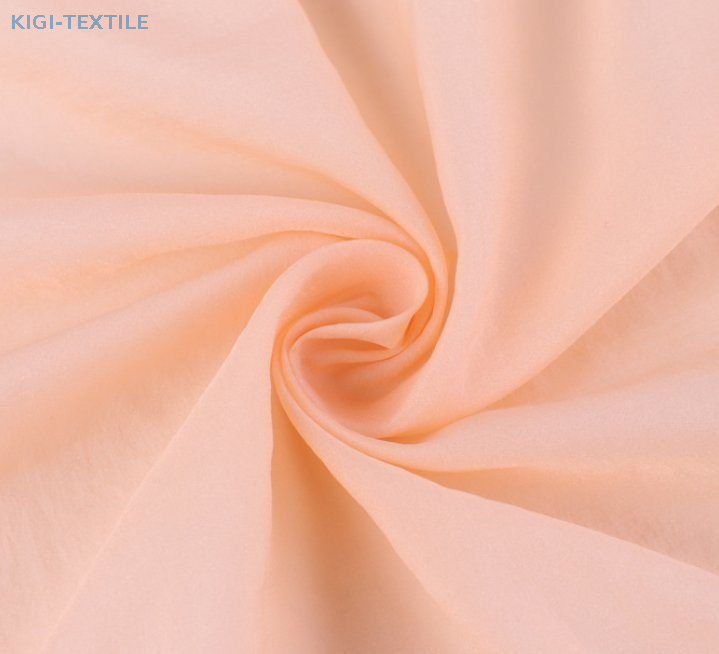
Buyers often confuse water repellency and waterproofing. Mixing these categories up leads to disastrous product launches. You must align the specific fabric type directly to your end-user requirements.
A true waterproof fabric relies on a physical barrier approach. Manufacturers laminate physical membranes—like PTFE or PU—directly onto the textile. Sometimes they apply heavy, continuous liquid coatings.
This method guarantees complete moisture blockage. Rain cannot enter under any circumstances. However, this absolute protection carries a severe penalty. It heavily compromises breathability and adds noticeable weight. Sweat vapor struggles to escape. Therefore, strict waterproofing works best exclusively for extreme weather gear, deep-sea sailing jackets, or heavy-duty outdoor expedition equipment.
Conversely, a water repellent fabric utilizes a surface approach. Mills apply Durable Water Repellent (DWR) and stain-release finishes at the microscopic yarn level. The spaces between the yarns remain open.
This outcome brilliantly maintains air permeability. The textile retains its natural drape and soft feel. Active air circulation easily cools the wearer. This approach proves ideal for high-end workwear, daily activewear, and urban commuter lines. In these environments, transient coffee spills and light afternoon rain showers represent the primary threats, not hurricane-force storms.
Decision Matrix: Fabric Type Comparison
Fabric Category | Core Mechanism | Breathability | Best End-Use Scenarios |
|---|---|---|---|
Waterproof | Solid membrane or heavy coating | Low to Moderate | Extreme weather, mountaineering, heavy storms |
Repellent | Chemical finish at the yarn level | High | Workwear, activewear, commuter apparel |
Use this logical framework when designing a product line. High-aerobic activity requires rapid moisture evaporation and basic repellency, not strict waterproofing. Match the activity level to the textile barrier strength.
Selecting a high-quality functional fabric requires rigorous testing. You cannot rely on visual inspection alone. You must evaluate these textiles across three critical dimensions to ensure they perform reliably in the real world.
Every surface treatment eventually degrades. Friction, dirt, and laundry detergents strip away the repellent coating over time. You must evaluate textiles based on wash-fastness. Frame your testing around established AATCC standard wash tests.
Always ask your supplier for performance retention metrics. How does the fabric perform after 20 wash cycles? What happens after 50 wash cycles? High-quality finishes maintain an 80% spray rating even after heavy laundering. Heat from a standard tumble dryer often reactivates these finishes, extending garment life significantly.
Chemical finishes heavily influence comfort. A distinct trade-off exists between maximum protection and sensory comfort. Over-applying an oil repellent fabric finish creates major problems. The garment becomes unpleasantly stiff. It might feel "crispy" or sound remarkably loud during movement.
You must prioritize sampling. Request physical swatches. Feel the drape. Listen to the fabric as it rubs together. Emphasize comfort just as much as chemical performance. If the user hates wearing it, the extreme stain resistance simply does not matter.
You should completely understand the difference between repellency and release. They perform different jobs. Repellency acts as a bouncer; it stops the stain from entering the weave entirely. The liquid just bounces off.
Stain release acts as a cleaner. If a wearer kneels in grease and physically forces the oil into the fabric structure under pressure, repellency fails. Stain release chemistry then takes over. It alters the fiber during the washing cycle, allowing water to slip underneath the forced stain and wash it away easily. Premium workwear requires both.
The global textile industry faces a massive environmental reckoning. Regulatory bodies worldwide are aggressively reshaping how we manufacture technical apparel. You must understand these shifts to future-proof your supply chain.
For decades, traditional C8 and C6 fluorocarbon chemistries dominated the market. They provided absolutely industry-leading oil and water repellency. Nothing else came close. However, these formulations rely on PFAS (per- and polyfluoroalkyl substances). Science now recognizes PFAS as "forever chemicals." They accumulate in the environment and human bodies. Consequently, strict global bans are rapidly eliminating their use.
The industry is actively transitioning to modern C0 finishes. We call these PFAS-free alternatives. Manufacturers formulate them using silicone, polyurethane, and advanced bio-based polymers. They represent the immediate future of sustainable textile engineering. They break down naturally and eliminate the toxicity risks associated with legacy chemicals.
You must approach C0 transitions with complete transparency regarding technical limitations. Currently, C0 chemistry performs excellently for standard water repellency. Rain easily beads up and rolls off silicone-treated jackets.
However, C0 currently struggles to match legacy C6 chemicals in heavy oleophobic applications. Achieving extreme oil repellency without fluorocarbons remains notoriously difficult. Heavy industrial workwear, mechanics' uniforms, and commercial kitchen aprons face the biggest hurdles. C0 treatments often allow hot cooking oils or engine grease to penetrate.
Never transition a high-risk product line blindly. You must thoroughly test C0 fabrics for your specific end-use cases. Advise your quality control team to run intensive localized wear-testing before committing to a full production run. Set realistic expectations with buyers regarding oil resistance while highlighting the enormous environmental benefits.
Integrating these advanced textiles into a consumer product line demands strategic thinking. You need to know exactly where they drive the most conversion and how to communicate their value effectively.
These specific textiles solve massive pain points in several distinct industries. They drive incredibly high conversion rates in medical scrubs, where liquid barrier protection is paramount. Culinary uniforms benefit immensely from stain release capabilities. Outdoor lifestyle apparel relies on lightweight rain resistance. High-end commuter suits leverage these finishes to keep urban professionals looking sharp despite messy subway commutes or unexpected rain.
High-grade repellent finishes command a premium cost at the manufacturing level. You must skillfully frame this increased cost as long-term consumer value. Educate the end consumer on the benefits. Emphasize selling points like "longer garment lifespan." Highlight "less frequent laundering." When consumers realize they save time on washing and rarely need to replace stained garments, the retail premium becomes highly justifiable.
Follow a strict shortlisting logic when sourcing these materials.
Secure lab-dip samples: Request physical swatches from trusted mills to evaluate drape and hand-feel.
Request detailed spec sheets: Scrutinize the documentation. Look specifically for standardized spray ratings and guaranteed wash durability metrics.
Conduct localized wear-testing: Build prototypes. Give them to actual professionals in your target demographic. Monitor how the fabric holds up to real-world friction, sweat, and spills before finalizing your order.
Integrating advanced textiles is ultimately a highly strategic balance of physics, comfort, and compliance. You cannot rely on one single metric to define success. The best technical garments blend invisible chemical protection with comfortable, breathable physical structures.
The right choice always relies on matching the specific chemical finish and baseline textile weave to the exact environmental demands of the wearer. A commuter needs a completely different fabric profile than a commercial chef.
Take immediate action on your supply chain. We highly encourage you to audit your current textile sourcing protocols today. Request new PFAS-free samples immediately. Consult directly with a technical fabric mill for your next product iteration to ensure you stay ahead of both consumer demands and environmental regulations.
A: Repellency naturally degrades due to friction, dirt build-up, and frequent laundering. High-quality finishes usually maintain effectiveness for 20 to 50 wash cycles. You can frequently reactivate the chemical coating by applying gentle heat. Simply tumbling the garment in a standard dryer on medium heat often restores the original water-beading performance.
A: Unlike heavy waterproof membranes, surface repellents generally preserve the fabric's natural airflow. These chemical finishes coat individual microscopic yarns rather than blocking the spaces between them. While over-application can sometimes cause slight stiffness, properly applied finishes ensure your garment remains highly breathable and comfortable for all-day wear.
A: For pure water resistance, PFAS-free (C0) fabrics perform exceptionally well and match legacy standards. However, achieving high-level oil repellency remains an evolving challenge in C0 chemistry. If you need a garment to block heavy industrial greases or hot cooking oils, traditional fluorocarbon chemistry still holds a distinct performance edge.
A: This remains limited by fundamental textile physics. Highly breathable waterproofs do exist via advanced microporous membranes, but they always involve a noticeable compromise. They will never breathe as freely as standard air-permeable repellent textiles. You must choose between absolute moisture blockage or maximum vapor transfer based on your activity level.


